Cum îngrijești bijuteriile din argint: de ce se înnegresc și ce faci când au pietre sau perle
How to care for silver jewellery: why it tarnishes, and what to do when it has stones or pearls
Argintul se înnegrește. Nu e un defect al unei bijuterii prost făcute, ci o reacție normală a metalului. Ce contează este ce faci după aceea, mai ales când bijuteria are pietre și perle, ca piesele din colecția Hudei Mahdi, unde dantela de sârmă se întâlnește cu pietre naturale și perle. Rețetele găsite pe internet, cu folie de aluminiu și bicarbonat, nu sunt gândite pentru ele.
De ce se înnegrește argintul
Înnegrirea (în engleză, „tarnish”) este un strat subțire de sulfură de argint. Se formează când argintul reacționează cu compuși ai sulfului din aer, și o face la temperatura camerei, mai repede în aer umed sau poluat. Argintul de bijuterie e de obicei un aliaj: de pildă, 925 înseamnă 92,5% argint și 7,5% alt metal, de obicei cupru. Cuprul din aliaj contribuie și el la schimbarea culorii.
Vestea bună: stratul e subțire și se curăță. Vestea mai puțin bună: dacă îl freci prea tare, freci și metalul.
Cum previi înnegrirea
Cel mai simplu lucru este să porți bijuteria. Pielea o curăță puțin, iar o piesă purtată des se înnegrește mai încet decât una uitată într-un sertar. Când nu o porți, ține-o într-o pungă sau o cutie închisă, ferită de umezeală. Pune-ți bijuteriile la sfârșit, după parfum, loțiune și fixativ, și scoate-le înainte de duș, baie, piscină sau mare.
Curățarea de zi cu zi
Pentru o piesă fără pietre sensibile, o lavetă moale și uscată, trecută ușor, ajunge de cele mai multe ori. Dacă nu ajunge, o apă cu un strop de săpun delicat, o perie foarte moale și o uscare completă fac treabă bună. Evită substanțele abrazive, care zgârie metalul.
Când bijuteria are pietre
Aici trebuie atenție. Metodele „de bucătărie” (baia cu folie și bicarbonat, oțetul, lămâia) au fost gândite pentru argint gol. Pietrele pot reacționa la ele, iar în montură se pot aduna resturi. Pentru piesele cu pietre, mai sigur este să le cureți doar la suprafață, cu laveta și puțină apă, fără să le scufunzi la nesfârșit. Dacă nu știi ce piatră ai, vezi și cum deosebești peridotul, zoisitul și smaraldul: unele pietre nu suportă ultrasunetele, aburul sau schimbările bruște de temperatură.
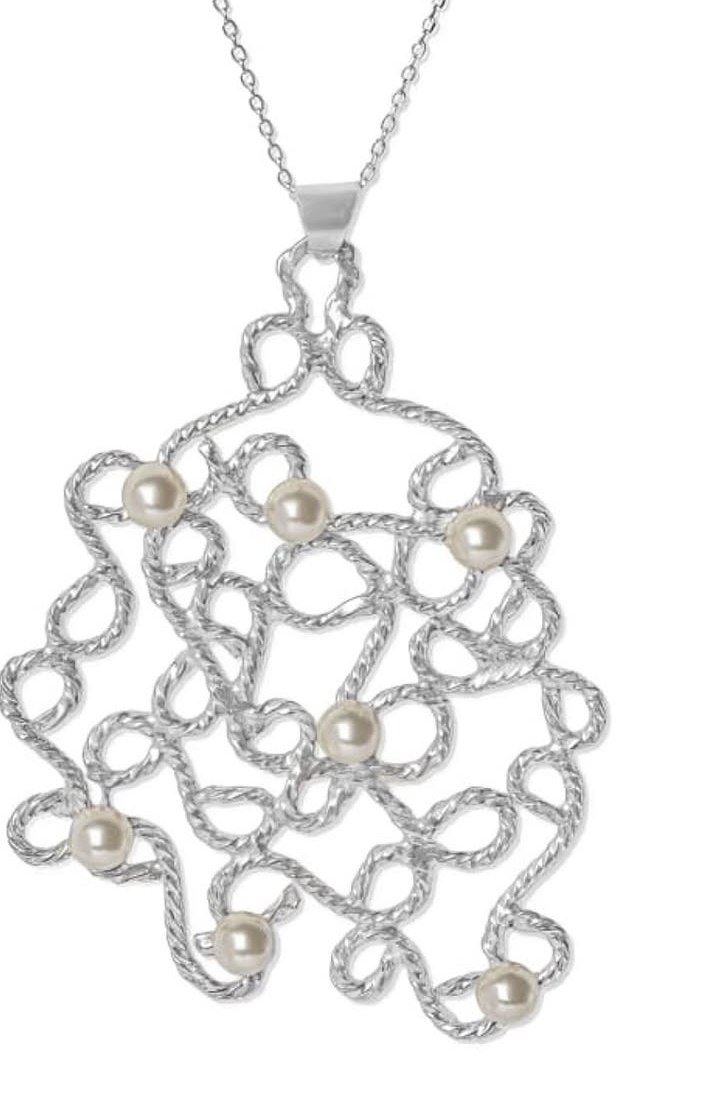
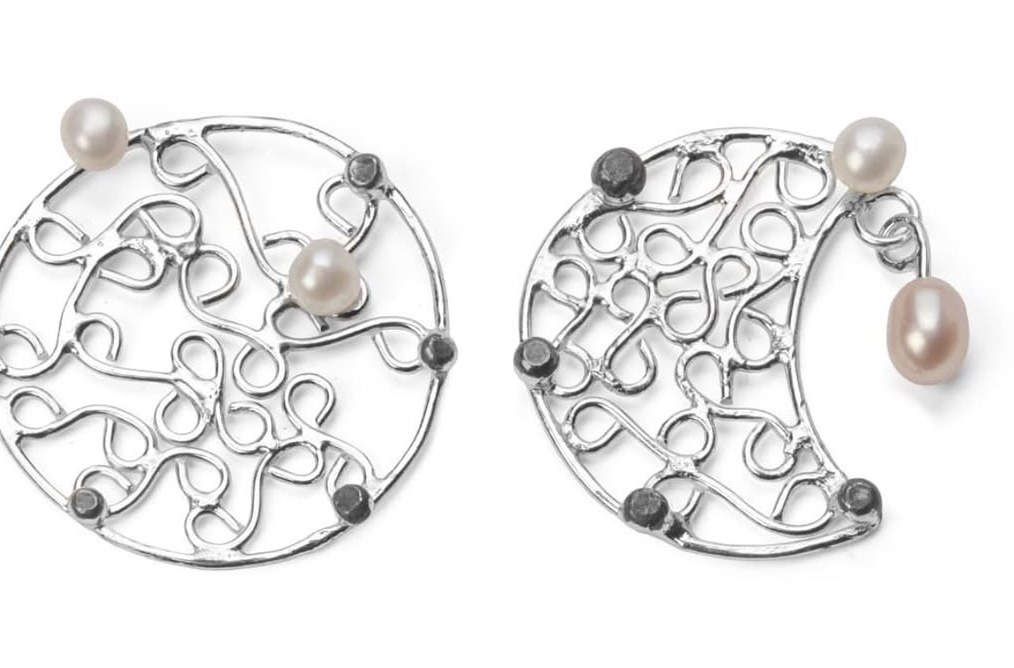
Pandantivul dantelă și cerceii lună au perle. Perlele sunt moi și sensibile la chimicale, parfum și transpirație. La piesele cu perle, folosește doar o lavetă moale, ușor umezită, și șterge-le după fiecare purtare.
Argint oxidat intenționat
Unele bijuterii din argint au un finisaj întunecat, făcut anume ca să scoată în relief desenul. Dacă piesa ta are așa ceva, curățarea agresivă îl poate șterge și poate lăsa metalul prea strălucitor pe alocuri. Dacă nu ești sigură dacă întunecimea e intenționată sau nu, întreabă-o pe cea care a făcut piesa înainte să freci.
Piesele aurii
Unele piese din colecție sunt de culoare aurie, ca colierul semilună. Pe site, materialul lor e descris ca „metal auriu”, iar îngrijirea poate fi alta decât la argint. Dacă ai o astfel de piesă, întreab-o pe Huda ce metal e și cum se curăță, nu o trata ca pe argint.
Dantela de sârmă
Piesele din sârmă răsucită, ca brățara cu frunze sau pandantivul dantelă, au multe locuri mici unde se strânge praf și sebum. O periuță foarte moale, uscată, ajunge în ele mai bine decât orice lichid. Nu apăsa: sârma se poate îndoi.
Când ceva nu merge
Dacă o piesă s-a înnegrit foarte tare, dacă o piatră se mișcă în montură sau dacă ceva s-a îndoit, nu încerca să repari singură. Scrie-i Hudei pe Instagram, cu o poză. Ea știe cum a lucrat piesa.
Silver tarnishes. It is not a flaw of badly made jewellery but a normal reaction of the metal. What matters is what you do next, especially when the piece has stones and pearls, like the work of Huda Mahdi, where wire lace meets natural stones and pearls. The recipes you find online, with aluminium foil and bicarbonate, were not designed for them.
Why silver tarnishes
Tarnish is a thin layer of silver sulphide. It forms when silver reacts with sulphur compounds in the air, and it does so at room temperature, faster in humid or polluted air. Jewellery silver is usually an alloy: 925, for instance, means 92.5% silver and 7.5% another metal, typically copper. The copper in the alloy contributes to the colour change too.
The good news: the layer is thin and it cleans off. The less good news: if you rub too hard, you rub the metal as well.
How to slow it down
The simplest thing is to wear the piece. Skin cleans it a little, and a piece worn often tarnishes more slowly than one forgotten in a drawer. When you are not wearing it, keep it in a closed pouch or box, away from damp. Put jewellery on last, after perfume, lotion and hairspray, and take it off before the shower, a bath, the pool or the sea.
Everyday cleaning
For a piece without delicate stones, a soft dry cloth, passed gently, is usually enough. If it is not, warm water with a drop of mild soap, a very soft brush and a full dry do a good job. Avoid abrasive products, which scratch the metal.
When the piece has stones
Here you need care. Kitchen methods (the foil and bicarbonate bath, vinegar, lemon) were designed for bare silver. Stones can react to them, and residue can collect in the setting. For pieces with stones, it is safer to clean only the surface, with a cloth and a little water, without soaking them for long. If you do not know which stone you have, see also how to tell peridot, zoisite and emerald: some stones do not tolerate ultrasonic cleaners, steam or sudden temperature changes.
The lace pendant and the moon earrings carry pearls. Pearls are soft and sensitive to chemicals, perfume and sweat. With pearl pieces, use only a soft, slightly damp cloth, and wipe them after every wear.
Deliberately oxidised silver
Some silver jewellery has a dark finish, made on purpose to bring out the drawing. If your piece has one, aggressive cleaning can wipe it away and leave the metal too bright in patches. If you are not sure whether the darkness is intended, ask whoever made the piece before you rub.
The gold-tone pieces
Some pieces in the collection are gold in colour, like the crescent necklace. On the site their material is described as "gold-tone metal", and the care may differ from silver. If you have one, ask Huda what metal it is and how to clean it, rather than treating it as silver.
Wire lace
Pieces in twisted wire, like the leaf cuff or the lace pendant, have many small places where dust and skin oil collect. A very soft, dry brush gets into them better than any liquid. Do not press: wire can bend.
When something is wrong
If a piece has tarnished heavily, if a stone moves in its setting or if something has bent, do not try to repair it yourself. Message Huda on Instagram with a photo. She knows how the piece was made.